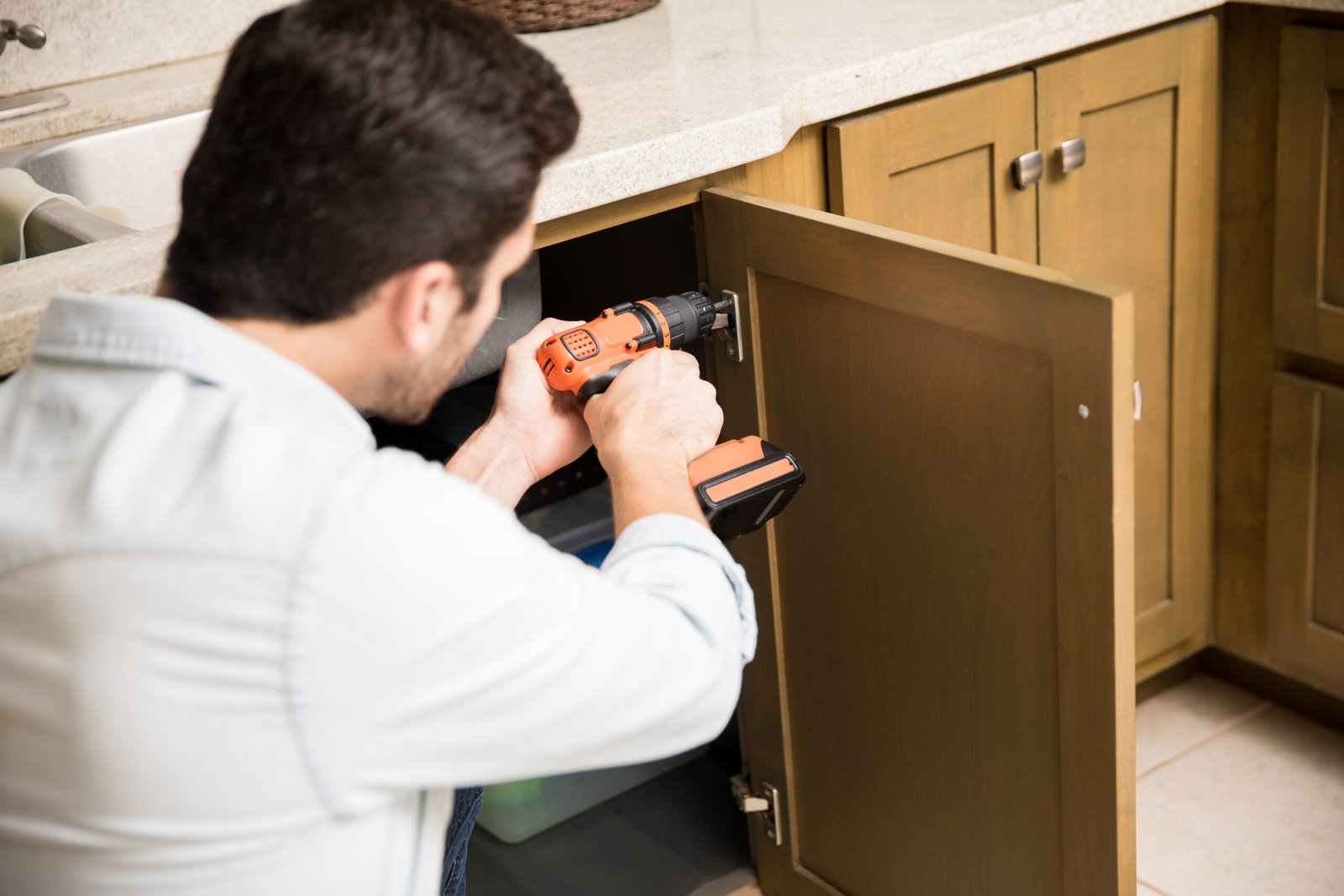
H2 understanding common kitchen door problems including sagging cabinet doors, misalignment, loose hinges, swelling, surface damage, and broken hardware in modern kitchen cabinetry
When learning how to repair kitchen doors, the first step is understanding what usually goes wrong. Kitchen doors are used many times every day, so they slowly start to wear out. One common problem is sagging cabinet doors. This happens when the hinges become weak or loose over time, making the door hang lower than it should.
Another frequent issue is misalignment. This means the door does not sit straight in the cabinet frame. It may rub against other doors or not close fully. Loose hinges are also very common and often cause both sagging and misalignment at the same time.
Some kitchen doors also swell due to moisture and heat from cooking. Steam and water can slowly enter the material, especially in MDF kitchen doors, causing them to expand. Surface damage like scratches, dents, or chipped edges can also happen from daily use. In some cases, the problem is broken hardware such as hinges, screws, or handles that no longer hold the door properly.
Understanding these issues helps you choose the right method for how to repair kitchen doors safely and correctly.
H2 essential tools and materials for how to repair kitchen doors such as screwdrivers, drill sets, hinge adjustment tools, wood filler, epoxy resin, clamps, sandpaper, and cabinet repair kits
Before starting any repair, it is important to gather the right tools. Most kitchen door repairs can be done with basic tools found at home or in a simple repair kit.
A screwdriver is the most important tool because many cabinet hinges are adjusted or tightened with screws. A drill set is helpful when screws are stripped or need replacing. Hinge adjustment tools are used for modern concealed hinges often found in modular kitchen systems.
For fixing damaged surfaces, wood filler and epoxy resin help fill cracks and holes. Sandpaper is used to smooth rough areas after filling. Clamps are useful when holding a door in place during repair. Many people also use cabinet repair kits because they include small parts like screws, brackets, and hinge plates needed for quick fixes.
Having these tools ready makes the process of how to repair kitchen doors easier, safer, and more effective.
H2 identifying kitchen door types for accurate repair including MDF kitchen doors, solid wood cabinet doors, laminate finishes, thermofoil cabinets, high gloss acrylic doors, and modern modular kitchen systems
Different kitchen doors need different repair methods. MDF kitchen doors are common and affordable, but they can swell when exposed to water. Solid wood cabinet doors are stronger and can be sanded and refinished many times.
Laminate finishes are thin layers placed over boards, and they can peel or chip if damaged. Thermofoil cabinets have a plastic coating that may lift when exposed to heat. High gloss acrylic doors are smooth and modern but can show scratches easily.
Modern modular kitchen systems often use engineered boards with concealed hinges and soft-close technology. Knowing the type of kitchen door helps you choose the safest and most effective method for how to repair kitchen doors without causing further damage.
H2 fixing loose hinges and misaligned cabinet doors using European concealed hinges, soft close hinge adjustment screws, and door alignment techniques for smooth closing and proper leveling
Loose hinges are one of the easiest problems to fix when learning how to repair kitchen doors. Many modern kitchens use European concealed hinges, which have small adjustment screws. These screws control the door’s position up, down, left, and right.
By carefully turning these screws, you can realign the door so it sits straight again. Soft close hinge systems also allow smooth movement, but they still need proper alignment to work correctly. If screws are loose in the cabinet frame, tightening them often solves the issue.
Proper alignment ensures the door closes smoothly without rubbing or gaps. This simple adjustment can make old kitchen doors feel new again.
H2 repairing sagging kitchen cabinet doors and restoring alignment through hinge tightening, mounting plate adjustments, and load balancing techniques for long term stability
Sagging doors often happen when hinges cannot support the weight anymore. To fix this, the first step is tightening all hinge screws. Sometimes, the mounting plate inside the cabinet becomes loose, so it must also be secured.
If the door is heavy, adjusting load balance helps reduce stress on one side. This can be done by slightly repositioning hinges so weight is spread evenly. In some cases, replacing old hinges with stronger modern soft-close versions improves long-term stability.
Fixing sagging is an important part of how to repair kitchen doors because it restores both appearance and function.
H2 repairing scratches chips dents and surface damage on kitchen doors using wood filler, laminate repair wax, edge banding replacement, and refinishing techniques for a seamless finish
Kitchen doors often get scratches and small dents from daily use. These can be repaired using wood filler for deeper marks. Once it dries, sanding makes the surface smooth again.
For laminate surfaces, repair wax can help cover light scratches. If the edge of a door is damaged, replacing edge banding can restore a clean finish. After repairs, refinishing techniques like painting or polishing help the door look new again.
These steps are useful in how to repair kitchen doors when the problem is cosmetic rather than structural.
H2 fixing swollen water damaged or humidity affected kitchen doors caused by steam exposure moisture absorption and poor ventilation with sealing drying and structural correction methods
Moisture is one of the biggest enemies of kitchen doors. Steam from cooking or water spills can cause swelling, especially in MDF boards. The first step is drying the door completely in a well-ventilated space.
Light swelling may be reduced by sanding the affected area. If the damage is more serious, sealing the surface with moisture-resistant coating helps prevent future problems. Poor ventilation in kitchens often makes this issue worse, so improving airflow is also important.
Understanding moisture control is key in how to repair kitchen doors and prevent repeated damage.
H2 replacing broken hinges handles and cabinet hardware including measurement matching screw replacement installation techniques and compatibility with modern soft close systems
Sometimes repair is not enough, especially when hardware is broken. Hinges and handles may need full replacement. It is important to measure old parts carefully before buying new ones so they fit correctly.
Replacing screws and mounting plates ensures the door stays secure. Many modern kitchens use soft-close systems, so new hardware should be compatible with these features.
Proper installation ensures smooth movement and long-lasting performance, making this step essential in how to repair kitchen doors.
H2 adjusting soft close mechanisms and modern kitchen door technology including damping systems concealed hinges smart cabinet hinges and 2026 updated self closing hardware solutions
Modern kitchens often use advanced hardware like damping systems and concealed hinges. Soft-close mechanisms control how slowly the door closes to avoid slamming. If these stop working properly, adjusting the hinge tension often fixes the issue.
Newer 2026 cabinet technology also includes smart hinges that improve motion control and durability. These systems may require careful adjustment rather than replacement.
Learning how these systems work helps improve how to repair kitchen doors in modern homes.
H2 painting refinishing and restoring kitchen doors with sanding priming moisture resistant coatings and durable kitchen cabinet paint systems for long lasting surface protection
Painting and refinishing can completely transform old kitchen doors. The process starts with sanding the surface to remove old paint and smooth imperfections. Primer is then applied to help the new paint stick properly.
Moisture-resistant coatings are important because kitchens are exposed to heat and steam. Durable cabinet paint systems provide long-lasting protection and improve appearance.
This step is useful for people who want a fresh look while learning how to repair kitchen doors.
H2 deciding when to repair or replace kitchen cabinet doors based on structural integrity repair cost material condition and long term durability considerations in modern kitchens
Not all kitchen doors can be repaired. If the structure is badly damaged or swollen beyond repair, replacement may be better. Repair is usually best when damage is small and the frame is still strong.
Cost is also important. Sometimes replacing a door is cheaper than multiple repairs. Material condition and long-term durability should always be considered before deciding.
This helps homeowners make the right choice in how to repair kitchen doors or when to replace them completely.
H2 preventative maintenance tips for extending kitchen door lifespan including humidity control regular cleaning hinge lubrication and early detection of wear and tear
Taking care of kitchen doors helps prevent future problems. Controlling humidity reduces swelling and damage. Regular cleaning removes grease and dirt that can affect hinges.
Lubricating hinges keeps them moving smoothly and reduces noise. Checking for early signs of wear, like loose screws or small cracks, helps prevent bigger repairs later.
Good maintenance makes how to repair kitchen doors less frequent and keeps cabinets in good condition for years.
H2 DIY kitchen door repair versus professional cabinet repair services comparing cost efficiency time investment skill level and complexity of modern kitchen cabinetry systems
Many people choose DIY repairs because they are cheaper and can be done quickly with basic tools. Simple fixes like tightening hinges or fixing scratches are easy to handle at home.
However, complex systems like modern modular kitchens or smart soft-close hinges may require professional help. Experts have the right tools and experience to avoid mistakes.
Choosing between DIY and professional service depends on skill level, time, and the complexity of the damage. Understanding this balance is an important part of learning how to repair kitchen doors effectively.