Understanding the Concept of Wall Decoration Balance in Interior Design
Wall decoration is more than just hanging pictures or adding paint. In modern interior design, it is about creating a space that feels balanced and comfortable. When you decorate walls, you are shaping how a room looks and feels. Some walls draw attention, while others stay simple to give your eyes a place to rest.
This idea is called visual balance. A room decorated needs a mix of decorated space and empty space, also known as negative space. If every wall is covered, the room can feel crowded and messy. If no walls are decorated, the room may feel plain and boring. The goal is to find the right balance so the room feels calm, stylish, and welcoming.
How Many Walls in a Room Should Be Decorated for the Best Look
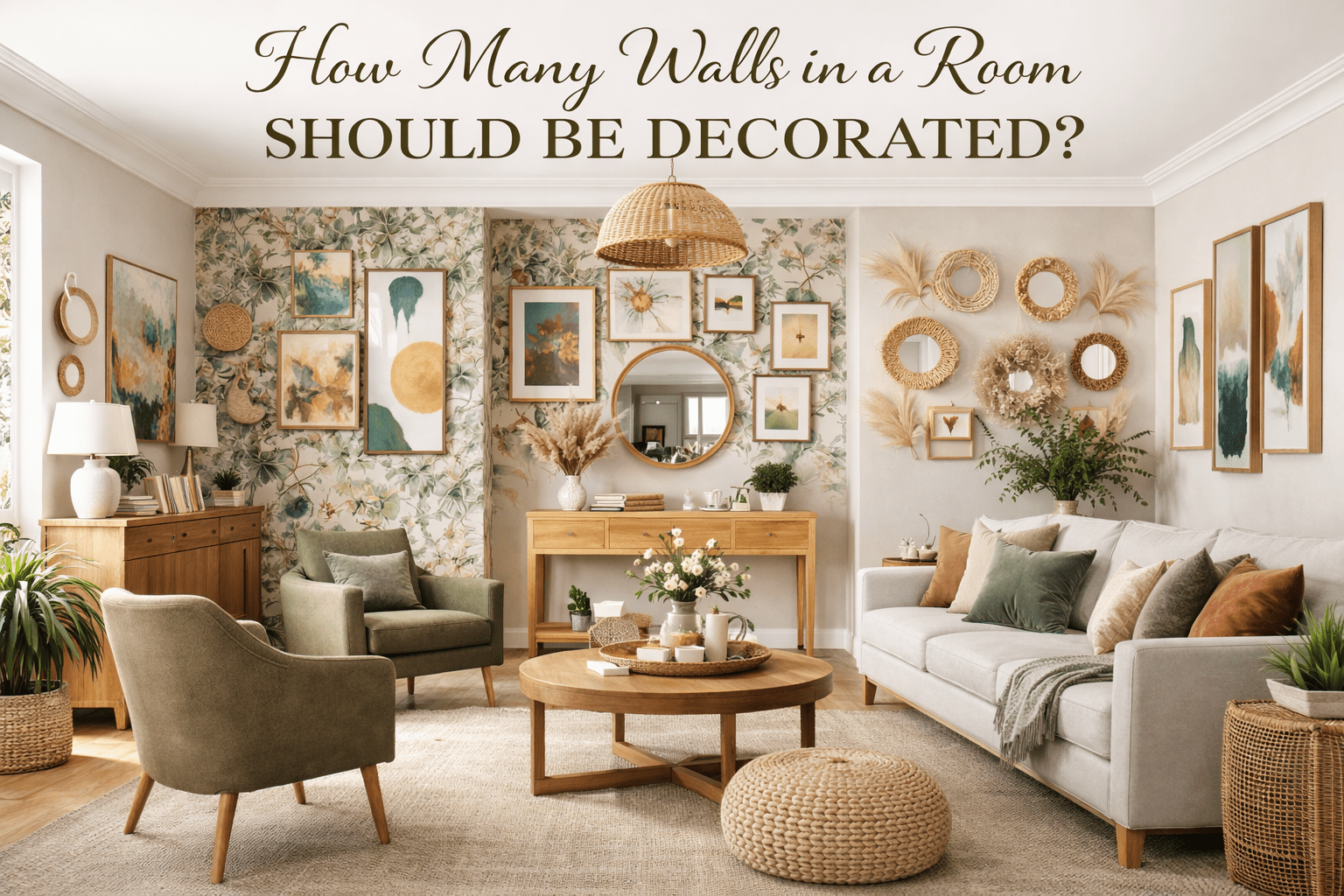
When people ask how many walls in a room should be decorated, the simple answer is usually one or two walls. This approach helps create a strong focal point without making the room feel too busy. Most designers agree that leaving some walls plain helps the decorated walls stand out more.
The exact number can change depending on the size of the room and how it is used. A small room often looks better with just one decorated wall, while a larger room may handle two decorated walls nicely. Personal style also plays a role, but keeping things balanced is always important.
Factors That Influence How Many Walls You Should Decorate
Several things can affect how many walls you should decorate. The size and shape of the room matter a lot. A large open room gives you more space to work with, while a small room needs careful planning to avoid feeling crowded.
Natural light also plays a big role. Bright rooms can handle more decoration, while darker rooms may need simpler walls to stay open and airy. Ceiling height can change how walls feel too. High ceilings often allow for bigger designs, while low ceilings look better with minimal decoration.
Furniture placement is another key factor. Walls behind sofas, beds, or dining tables are often the best places to decorate. Good room layout design and smart space optimization help make sure the décor fits well with how people move through the space. Thoughtful home décor planning keeps everything connected and easy to enjoy.
The One Accent Wall Rule and When to Use It
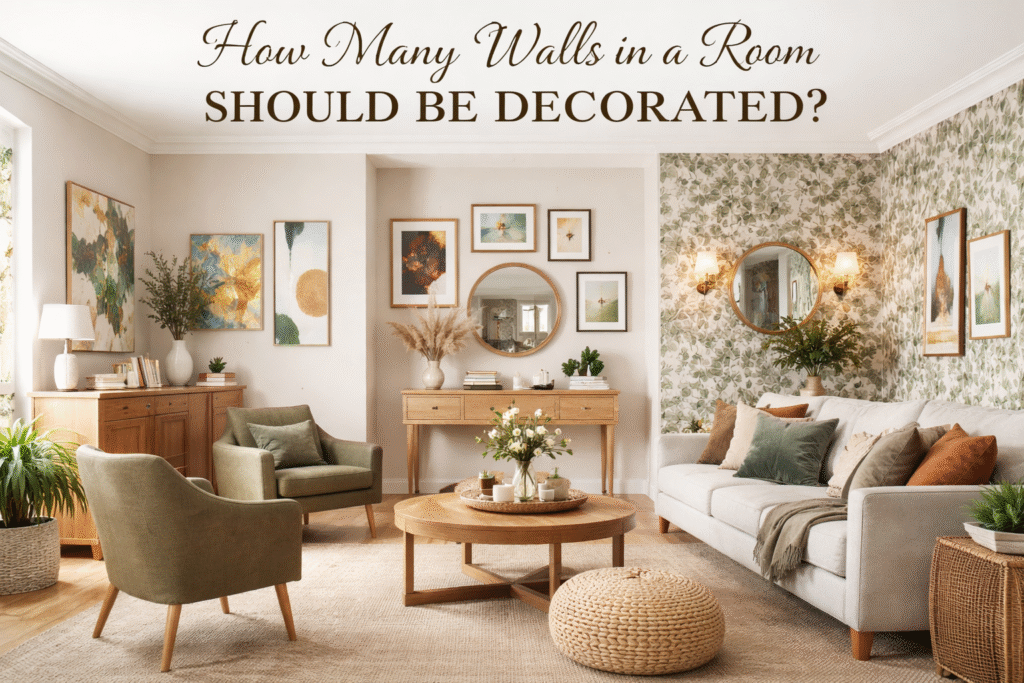
The accent wall is a popular idea in home design. This means choosing one wall to decorate in a bold or special way while keeping the others simple. It works well because it creates a clear focal point without overwhelming the room.
A single accent wall is perfect for bedrooms, living rooms, and small apartments. For example, the wall behind a bed or sofa can become a feature wall design that draws attention. Many people use paint, wallpaper, or art to create statement wall décor that feels unique but not too busy.
When Decorating Two or More Walls Makes Sense
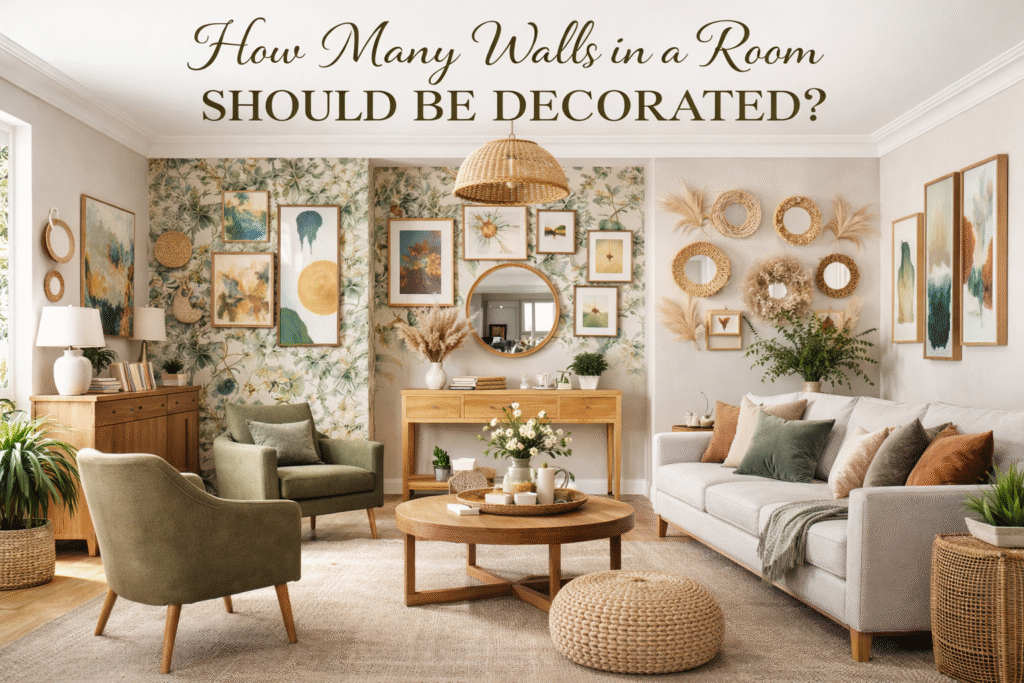
Sometimes decorating more than one wall works well, especially in larger rooms or open spaces. In a big living room or open-concept home, one wall may not be enough to create visual interest. Adding décor to two walls can help balance the space.
Gallery-style interiors also benefit from multiple decorated walls. In these cases, the key is to keep a sense of harmony. Colors, frames, and styles should match so the room feels connected instead of chaotic. Even when using more walls, it is still important to leave some empty space.
Common Mistakes to Avoid When Decorating Walls
Many people make simple mistakes when decorating walls. One common issue is trying to fill every wall, which makes the room feel crowded. Another mistake is ignoring color coordination, which can make the space look messy and unplanned.
Mismatched wall art and poor spacing can also hurt the overall look. When items are placed too close or too far apart, they lose their impact. These are common home styling mistakes that can be avoided with careful planning. Paying attention to wall art placement tips and avoiding basic interior design errors can make a big difference.
Minimalist vs Maximalist Wall Decoration Styles
Different styles can change how many walls you decorate. A minimalist style focuses on simplicity. It often uses fewer decorated walls with clean lines and soft colors. This creates a calm and open feeling.
A maximalist style is the opposite. It uses bold colors, patterns, and more wall décor. In this style, more walls may be decorated, but the design still needs to feel organized. Choosing between these styles depends on your personality and how you want your space to feel.
Room-by-Room Guide to Wall Decoration
Each room in a home has its own needs. In living rooms, wall décor often goes behind the sofa or around a TV area to create a strong focal point. Living room wall décor ideas usually focus on comfort and style.
Bedrooms benefit from simple and relaxing designs. Bedroom wall styling often highlights the wall behind the bed. Kitchens usually need lighter decoration, with small touches that do not take up too much space. Kitchen wall decoration tips often include shelves or small art pieces.
Hallways can use a few decorations to make them feel less empty, while home offices may need inspiring wall décor that helps with focus and creativity.
How to Choose Which Wall to Decorate First
Choosing the right wall to decorate is very important. The best wall is usually the one you see first when you enter the room. This creates a natural focal point.
Walls behind key furniture pieces like beds or sofas are also great choices. Natural light can help highlight certain walls, making them better for decoration. Creating a clear visual hierarchy helps guide the eye and makes the room feel well-designed.
Color Psychology and Wall Decoration Decisions
Colors can change how a room feels. Soft colors like blue and green can make a space feel calm, while bright colors like yellow or red can add energy. Understanding color psychology in interior design helps you choose the right look.
Wall color combinations should match the mood you want to create. Light colors can make a room feel bigger, while darker tones can make it feel cozy. The right choices can improve the overall home ambiance and make the space more enjoyable.
Budget-Friendly Wall Decoration Ideas for Modern Homes
Decorating walls does not have to cost a lot of money. There are many affordable wall décor options that look great and save money. Simple DIY home decoration ideas like handmade art or printed photos can add a personal touch.
Peel-and-stick wallpapers are easy to use and can quickly change the look of a room. Framed prints and simple designs also work well for budget interior design. With a little creativity, you can make your walls look stylish without spending too much.
Conclusion on How Many Walls in a Room Should Be Decorated
In the end, the number of walls you decorate is less important than how balanced the room feels. For most spaces, decorating one or two walls is the best choice. This creates a strong design without making the room feel too busy.
Every home is different, so it is okay to adjust based on your space and personal style. The key is to keep a good balance between decorated and empty walls. When done right, your room will feel comfortable, stylish, and easy to enjoy.